
Introduction
This recipe is all about making sourdough discard bread in the easiest way possible without kneading the dough by hand. Many people who keep a sourdough starter often throw away extra starter, which is called discard. This recipe helps you use that discard in a smart and delicious way. You do not need special skills, strong hands, or a lot of time. The dough mixes with a spoon, rests on its own, and slowly turns into beautiful homemade bread. This recipe is perfect for beginners who feel nervous about baking bread but still want to enjoy real homemade sourdough flavor.
People love sourdough discard bread without kneading because it feels simple and stress free. There is no hard work, no mess on the counter, and no complicated steps to remember. You mix the ingredients, let time do the work, and bake. The bread comes out with a crispy outside and a soft inside. It has a gentle sour taste that feels comforting and warm. Many people enjoy this bread because it tastes better than store bread and feels more natural. It also makes people feel proud because they turned something extra into something special.
You can make this bread when you want comfort, calm, and a sense of home. It is perfect for busy days when you do not have energy to knead dough. It is also great for quiet weekends when you want your home to smell like fresh bread. Many people make this bread for emotional comfort, because baking can feel relaxing and grounding. Others make it for taste, because fresh bread with butter is always satisfying. Some people enjoy it for fitness reasons, since homemade bread often feels lighter and more filling than packaged bread. This recipe fits beautifully into real life.
Ingredients You Will Need
Sourdough discard one cup
All purpose flour three cups
Warm water one and a half cups
Salt one and a half teaspoons
Honey or sugar one tablespoon
Olive oil one tablespoon
Baking yeast one quarter teaspoon optional for faster rise
Extra flour for dusting as needed
Step by Step Method
First, take a large mixing bowl. Add the sourdough discard to the bowl. Make sure it is at room temperature. Cold discard can slow down the process.
Add warm water to the bowl. The water should feel warm to your finger, not hot. Warm water helps everything mix smoothly.
Add honey or sugar and olive oil to the bowl. Stir gently with a wooden spoon until combined.
If you want a faster rise, add the baking yeast at this step. This is optional and not required.
Add salt to the bowl and mix again. Salt adds flavor and helps control fermentation.
Slowly add the all purpose flour to the bowl. Add one cup at a time and stir gently.
Keep mixing until all flour is added. The dough will look sticky and rough. This is normal for no knead bread.
Once mixed, scrape down the sides of the bowl. Cover the bowl with a clean cloth or plastic wrap.
Let the dough rest at room temperature for eight to twelve hours. Overnight resting works very well.
During this time, the dough will rise and develop bubbles. This slow process builds flavor without effort.
After resting, the dough should look puffy and soft. It will still be sticky.
Sprinkle flour on a clean surface. Gently pour the dough out onto the floured area.
Do not punch or knead the dough. Just fold it gently a few times to shape it.
Shape the dough into a round loaf. Use flour on your hands to prevent sticking.
Place the dough on parchment paper or into a floured bowl.
Cover again and let it rest for thirty to sixty minutes while the oven heats.
Preheat your oven to four hundred fifty degrees Fahrenheit.
Place a heavy oven safe pot with a lid inside the oven while it heats.
Carefully remove the hot pot. Place the dough inside using the parchment paper.
Cover with the lid and place back in the oven.
Bake for thirty minutes with the lid on.
Remove the lid and bake for another fifteen to twenty minutes until golden brown.
Remove the bread from the oven and place on a cooling rack.
Let the bread cool completely before slicing for best texture.
Why This Recipe Is Special
This sourdough discard bread without kneading is special because it makes bread baking easy for everyone. You do not need strength, experience, or special tools. Time does most of the work for you. The long resting time allows natural fermentation to improve flavor and texture.
Using sourdough discard reduces food waste and saves money. Instead of throwing away starter, you turn it into nourishing bread. This feels good for the heart and the home. Many people enjoy knowing they are using simple ingredients with purpose.
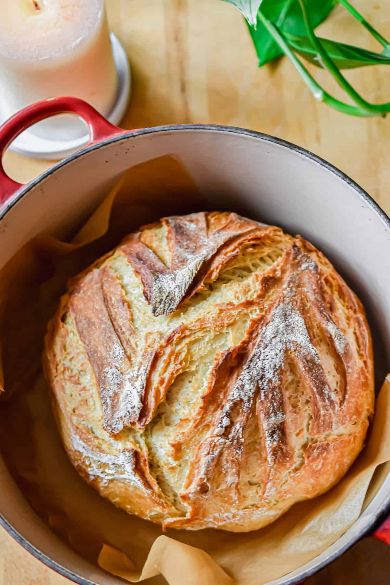
The taste of this bread is rich, gentle, and comforting. The crust becomes crisp while the inside stays soft and airy. It pairs well with sweet or savory foods. Butter, jam, soup, eggs, or cheese all taste wonderful with this bread. It feels like bakery bread made in your own kitchen.
Extra Tips for Better Taste
Let the dough rest longer for deeper flavor. Longer fermentation brings a more complex taste.
Add a spoon of olive oil for a softer crumb.
Sprinkle flour on top before baking for a rustic look.
Add herbs or seeds to the dough for extra flavor if you like.
Use a kitchen scale for more accurate flour measurement if possible.
Store bread wrapped in a clean cloth to keep the crust fresh.
Final Thoughts
Sourdough discard bread without kneading is a gift to home bakers. It removes fear and effort from bread making and replaces them with patience and joy. This recipe proves that good bread does not need hard work. It needs time, care, and simple ingredients. Whether you are new to baking or just tired of complicated recipes, this bread fits your life. Once you try it, you may never want to waste sourdough discard again. Enjoy the process and enjoy every warm slice.
Nutrition Details
Nutrition table per serving one slice
Calories one hundred eighty
Protein five grams
Carbohydrates thirty four grams
Fat three grams
Fiber two grams
Sugar two grams
Sodium three hundred milligrams
Values are approximate and depend on ingredient brands and portion size.
Disclaimer
This content is shared for general information and home cooking enjoyment. Every person is different, and food may affect people in different ways. Always listen to your body and choose foods that suit your personal health needs. If you have medical conditions or dietary concerns, please speak with a healthcare professional before making changes to your diet.
