
Introduction
Yorkshire pudding is one of those comforting dishes that can make any meal feel special. It comes from traditional British cooking and is known for its light, airy, and golden texture. The best part is that it looks fancy but is actually made with the simplest ingredients you probably already have in your kitchen — eggs, flour, and milk. When baked just right, the pudding puffs up beautifully, creating a crisp outer layer and a soft, fluffy inside. A giant version of this classic makes it even more exciting to serve, whether it is part of a Sunday roast or a cozy dinner at home.
People love this recipe because it feels like a treat even though it is so easy to make. The smell of the batter rising in the oven fills the house with warmth and comfort. It is crispy at the edges, soft in the middle, and perfect for soaking up sauces or gravy. Many families make Yorkshire pudding as part of a roast dinner with beef or chicken, but you can enjoy it with almost anything. You can fill it with vegetables, meats, or even make it sweet by adding a touch of sugar and topping it with fruit or syrup. It is a recipe that fits many moods — from fancy family dinners to simple home comfort.
This giant puffy Yorkshire pudding recipe is perfect when you want something quick, affordable, and satisfying. You do not need to be a professional cook to get it right. Once you learn how to make it, you will want to bake it again and again. It is great for beginners who are just learning to cook or for anyone who wants to impress guests without spending hours in the kitchen. Whether you are cooking for a celebration or simply want to enjoy a warm and cozy dish on a cold evening, this recipe is your answer. The beauty of it is that it looks dramatic but comes together easily.
Ingredients You Will Need
-
1 cup all-purpose flour (about 120 grams)
-
1 cup whole milk (240 milliliters)
-
3 large eggs
-
½ teaspoon salt
-
3 tablespoons vegetable oil or beef dripping
-
Optional: a pinch of black pepper for flavor
Step by Step Method
Step 1: Preheat the Oven
Before you begin mixing, set your oven to 425°F (220°C). It is important that the oven is very hot before you put the pudding inside. A hot oven helps the pudding rise and become beautifully puffy. Place your baking dish or large muffin tin inside the oven while it preheats. This step will warm the oil and make sure the batter sizzles when you pour it in.
Step 2: Make the Batter
In a large mixing bowl, add the flour and salt. Create a small well in the center and crack the eggs into it. Begin whisking the eggs slowly, pulling in some flour from the sides as you go. Gradually pour in the milk while whisking until the mixture becomes smooth and lump-free. You can use a hand whisk, electric whisk, or even a blender. The batter should be light, creamy, and slightly runny, similar to pancake batter.
Step 3: Let the Batter Rest
Once the batter is ready, set it aside for about 20 to 30 minutes. Letting it rest allows the flour to absorb the liquid and the air bubbles to settle. This step helps create a better texture when baking. While the batter rests, check that the oven and the oil are very hot. You should see a slight shimmer in the oil — that means it is ready.
Step 4: Heat the Oil
Pour the vegetable oil or beef dripping into a deep baking dish. Place it back in the hot oven for about 5 minutes until the oil is smoking hot. This is one of the most important steps. If the oil is not hot enough, the pudding will not puff properly.
Step 5: Pour in the Batter
Carefully remove the dish from the oven. Be cautious, as the oil will be extremely hot. Slowly pour the batter into the dish. You should hear a quick sizzle — that is a good sign that your batter will rise beautifully. Place the dish back into the oven immediately to trap the heat.
Step 6: Bake the Pudding
Bake for about 25 to 30 minutes without opening the oven door. It is very important not to open the oven while it is baking, as the sudden change in temperature can make the pudding collapse. The pudding will start to rise and turn golden brown. You can peek through the oven window to watch it puff up dramatically.
Step 7: Serve and Enjoy
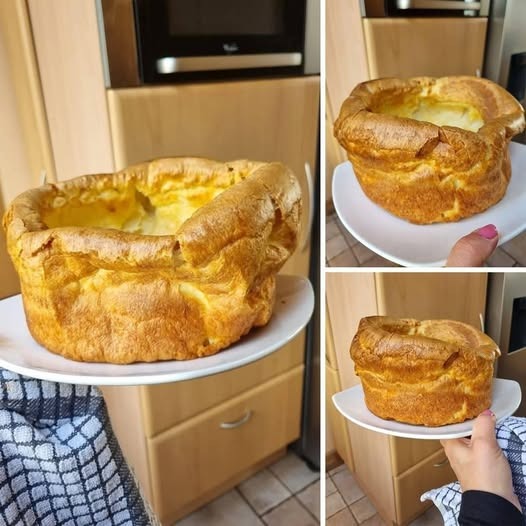
When it is ready, the giant Yorkshire pudding should be tall, crisp on the outside, and soft inside. Take it out of the oven and serve it immediately. You can place it on a large plate and fill the middle with roasted meat, vegetables, or gravy. Some people also enjoy it with sausages or even as a base for a sweet dish with berries and syrup.
Why This Recipe Is Special
What makes this giant Yorkshire pudding recipe stand out is its beautiful simplicity. It uses only a few basic ingredients, yet the result looks like something made in a restaurant. It is the perfect combination of crispy edges and a soft, custard-like center. The puffiness makes it fun to eat, and the flavor is mild enough to pair with many other foods.
From a health point of view, Yorkshire pudding is not overly heavy or greasy if you use the right amount of oil. The eggs add protein, and the milk gives it a light richness. It is a great way to add variety to your meals without needing extra effort. For people who love balanced meals, this pudding can serve as a wonderful side that fits both savory and slightly sweet options.
Another reason it is so loved is that it brings people together. It is often part of Sunday roast dinners in the United Kingdom, a time when families gather to enjoy good food and conversation. Making this at home gives you the same comforting feeling — the warmth, the aroma, and the joy of sharing something homemade.
Extra Tips for Better Taste
1. Use room temperature ingredients:
Make sure your milk and eggs are not cold. Room temperature ingredients mix better and help the batter rise more evenly.
2. Rest the batter longer for extra fluffiness:
If you have time, let the batter rest for up to an hour. The more it rests, the smoother and lighter it becomes.
3. Make sure the oil is very hot:
This cannot be stressed enough. The oil must be smoking hot before pouring in the batter. This helps create the signature puff and crisp edges.
4. Avoid opening the oven door:
If you open the door, you will lose heat, and the pudding might deflate. Keep the oven closed until the end of baking time.
5. Try different flavors:
For a savory twist, you can add a small amount of grated cheese or herbs like rosemary or thyme to the batter. For a sweet version, add a teaspoon of sugar and serve it with jam, honey, or fruit compote.
6. Serve immediately:
Yorkshire pudding tastes best when fresh and hot. Once it cools, it becomes softer and loses its airy texture.
7. Use the right dish:
A metal baking dish works better than glass or ceramic because it heats up faster. The quick heat helps the pudding puff up properly.
Final Thoughts
The giant puffy Yorkshire pudding recipe is proof that simple ingredients can create something truly special. It does not take much skill or time, yet it looks and tastes amazing. The golden puff with its crispy shell and tender inside is a sight that never fails to impress. Whether you are cooking a Sunday roast or want to enjoy something cozy and filling, this pudding fits every occasion.
Making Yorkshire pudding is also a reminder that cooking can be joyful and fun. The moment you open the oven and see that big puff rise is pure magic. It gives a sense of accomplishment even to beginners. Once you try it, you might find yourself making it often, pairing it with different dishes, and enjoying how it transforms simple meals into memorable ones.
So, next time you want to add a special touch to your dinner, make this giant puffy Yorkshire pudding. Serve it proudly, enjoy the reactions, and let it become one of your favorite recipes.
Nutrition Details
| Nutrient | Per Serving (1/4 of pudding) |
|---|---|
| Calories | 190 kcal |
| Protein | 7 grams |
| Fat | 10 grams |
| Saturated Fat | 2 grams |
| Carbohydrates | 16 grams |
| Sugar | 2 grams |
| Fiber | 0.6 grams |
| Cholesterol | 110 mg |
| Sodium | 190 mg |
Serving Size: 1 portion of the giant pudding (about one fourth of the whole)
Makes: 4 servings
This nutrition breakdown is approximate and may vary depending on the oil or milk you use. For a lighter version, you can use low-fat milk and reduce the oil slightly.
Disclaimer
This recipe is meant for general cooking enjoyment and not for medical or diet advice. Everyone’s body is different, and nutritional results can vary based on ingredients and portion sizes. If you have dietary restrictions or health conditions, please consult a nutritionist or healthcare provider before making changes to your diet.
