
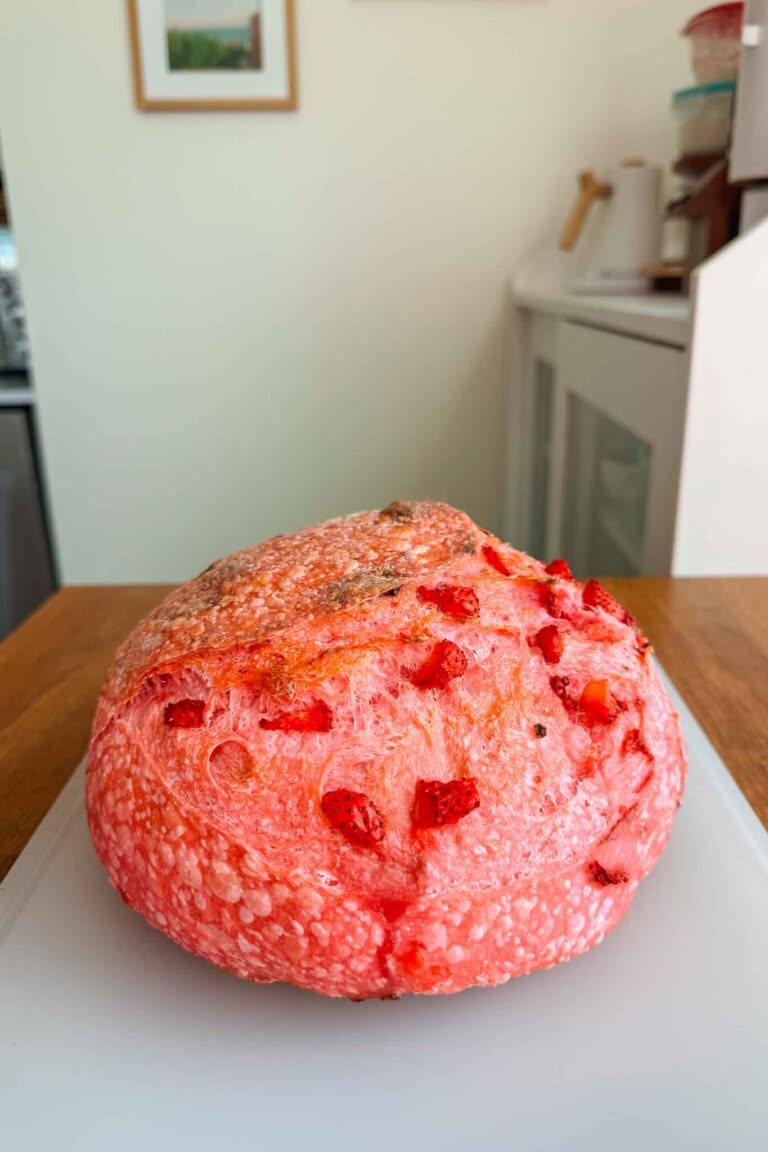
Strawberry sourdough bread is a truly delightful and unique twist on the classic loaf of homemade bread that so many people have come to love over the last few years. It combines the deep and complex flavors of traditional wild yeast fermentation with the bright and juicy sweetness of fresh summer fruit to create something truly magical in your kitchen. This recipe is not just about baking another random loaf of bread to sit on your counter but rather about creating an artisanal experience that brings together old world baking methods with fresh and vibrant flavors. When you mix the natural tanginess of a mature sourdough starter with the sweet and slightly acidic notes of real strawberries you get a beautiful balance that elevates your morning toast to a whole new level of culinary enjoyment. If you have ever felt bored with plain white bread or standard whole wheat loaves then this colorful and deeply fragrant recipe is exactly what you need to fall in love with baking all over again.
People absolutely adore this specific bread because it offers a perfect contrast of textures and flavors that you simply cannot find in a regular grocery store loaf. The crust bakes up incredibly crispy and golden brown while the inside remains pillowy soft and beautifully chewy with pockets of jammy fruit scattered throughout the entire crumb. Every single slice reveals a gorgeous swirl of pink and red colors which makes it look like it came straight out of a high end boutique bakery in a big city. Beyond the beautiful look of the bread people really love the way the natural sugars in the fruit caramelize against the high heat of the oven to create sweet little sticky spots on the crust that taste like gourmet jam. It is also a massive hit because it bridges the gap between sweet breakfast pastries and savory artisanal breads allowing you to enjoy the best of both worlds in every single bite you take.
There are so many wonderful reasons and perfect moments to roll up your sleeves and mix a batch of this beautiful pink dough in your kitchen. You might want to make it during the peak of the warm summer season when fresh berries are incredibly cheap and bursting with natural juices at your local farmers market. It is also the ultimate emotional baking project for a lazy weekend morning when you want your entire house to smell like warm vanilla and sweet roasted fruit while you sip your favorite hot coffee. From a fitness and wellness perspective this bread is a fantastic option because the long and slow fermentation process breaks down gluten and phytic acid making it much easier on your stomach than regular commercial bread. Whether you want to impress your friends at a fancy Sunday brunch or you just want a healthier and more natural treat to satisfy your sweet tooth this recipe fits the bill perfectly.
Baking this loaf is a deeply therapeutic journey that teaches you to slow down and appreciate the beautiful science of natural wild yeast and simple ingredients. It allows you to connect with your food in a profound way as you watch a simple bowl of flour and water transform into a magnificent rising masterpiece over the course of a day. This recipe is specifically designed to be approachable and easy to follow so that you do not feel overwhelmed by complicated baking jargon or impossible techniques. You do not need any fancy or expensive commercial equipment to achieve a professional result at home just some patience and a love for good food. By the time you pull your sizzling hot Dutch oven out of the stove you will feel an immense sense of pride and accomplishment that only comes from baking a truly spectacular loaf of artisanal fruit bread.
Ingredients You Will Need
To make this beautiful loaf of strawberry sourdough bread you will need a few simple pantry staples along with some fresh fruit. Please ensure your ingredients are measured accurately for the best possible results.
-
Active and bubbly sourdough starter: 100 grams
-
Warm filtered water: 250 grams
-
White bread flour with high protein content: 400 grams
-
Whole wheat flour for a rustic touch: 100 grams
-
Fine sea salt: 10 grams
-
Fresh sweet strawberries washed and chopped: 150 grams
-
Granulated white sugar or raw honey: 20 grams
-
Pure vanilla extract for extra aroma: 5 grams
Step by Step Method
Step One: Mixing the Dough Base
Start by taking a large glass mixing bowl and adding your active bubbly sourdough starter along with the warm filtered water. Use a sturdy whisk or a fork to mix these two ingredients together until the starter is completely dissolved and the water looks milky. Next add the granulated white sugar and the pure vanilla extract into the liquid and stir well to ensure everything is fully incorporated. Once the liquids are ready pour in your white bread flour and your whole wheat flour into the same bowl. Use a thick wooden spoon or your clean hands to mix the flour and liquid together until a shaggy and messy dough forms with no dry flour spots left at the bottom of your bowl. Cover the bowl with a damp clean kitchen towel and let it rest on your kitchen counter for about thirty minutes so the flour can fully absorb the water.
Step Two: Adding the Salt
After the thirty minute resting period is over remove the damp kitchen towel from your bowl. Sprinkle the fine sea salt evenly over the top of your shaggy dough. Wet your hands with a little bit of extra water to prevent sticking then gently squeeze and pinch the dough to incorporate the salt throughout the mixture. You will notice that the texture of the dough starts to change almost immediately becoming smoother and more cohesive as you work the salt in. Fold the dough over itself a few times until the grainy feeling of the salt disappears completely. Cover the bowl once again with your damp towel and let it sit undisturbed for another thirty minutes before moving on to the next phase.
Step Three: The Stretch and Fold Process
Instead of traditional kneading sourdough bread relies on a series of gentle stretches and folds to build a strong gluten structure. With wet hands reach down to the bottom of the bowl and grab one side of the dough then gently pull it upwards toward the ceiling without ripping it. Fold this stretched piece of dough over the top toward the center of the bowl. Rotate your bowl ninety degrees and repeat this exact same motion stretching the dough upward and folding it over the center. Do this a total of four times until you have gone all the way around the bowl which completes your first official set of stretches and folds. Repeat this entire process every thirty minutes for a total of two hours meaning you will perform four separate sets of stretches and folds in total.
Step Four: Preparing and Incorporating the Strawberries
While your dough is going through its stretching cycles you need to prepare your fresh fruit. Wash your fresh strawberries thoroughly then pat them completely dry with a paper towel because excess moisture will make your dough too wet and sticky. Cut the green tops off the berries and chop them into small bite sized pieces about the size of chocolate chips. Place the chopped strawberries in a small bowl and toss them with a tiny spoonful of flour to help them stick to the dough later. During your final set of stretches and folds gently scatter a handful of the chopped strawberries onto the dough before you fold it over. Continue folding and adding berries gradually until all the fruit is beautiful and evenly distributed throughout the dough layers without crushing the berries completely.
Step Five: The Bulk Fermentation
Now that your fruit is safely tucked inside the dough it is time for the main rising period which is also known as bulk fermentation. Cover your bowl tightly with plastic wrap or a beeswax wrap to keep the moisture sealed inside so the top of the dough does not dry out and form a hard crust. Place the bowl in a warm and cozy spot in your kitchen away from any cold drafts or open windows. Let the dough rise for anywhere from four to six hours depending on the actual temperature of your home. You will know it is ready when the dough has grown by about fifty percent in size looks puffy and shows a few nice air bubbles on the smooth top surface.
Step Six: Shaping the Loaf
Gently tip the fermented dough out onto a very lightly floured clean kitchen counter top. Be careful not to deflate all the wonderful air bubbles that have formed inside the dough during the long rise. Gently pull the dough into a rough rectangle shape using your fingertips. Fold the bottom third of the dough up toward the middle then fold the left side and the right side over the center like a neat paper letter. Roll the dough up tightly from the top down to form a smooth and round log shape. Place your hands behind the dough log and gently pull it toward your body across the counter to create nice surface tension on the outer skin of the loaf.
Step Seven: The Cold Overnight Rise
Dust a clean proofing basket or a medium bowl lined with a linen towel heavily with rice flour or bread flour to prevent the wet dough from sticking. Carefully pick up your shaped dough loaf and place it upside down into the prepared basket so the smooth top skin is resting against the bottom of the basket. Pinch the exposed bottom seams of the dough together with your fingers to lock in the shape. Cover the entire basket with a plastic bag and place it into your refrigerator for a cold overnight rest lasting anywhere from twelve to eighteen hours. This cold fermentation slows down the yeast while allowing the bacteria to develop a deeper sour flavor and makes the dough firm and easy to score.
Step Eight: Baking to Perfection
The next morning place your heavy cast iron Dutch oven with its lid on into your oven and preheat it to two hundred and thirty degrees Celsius for at least forty five minutes so it gets intensely hot. Take your cold dough out of the refrigerator right before you are ready to bake. Flip the basket upside down onto a piece of parchment paper so the dough slides out gently. Use a very sharp knife or a baking razor to cut a long slash down the center of the loaf to allow steam to escape. Carefully use the parchment paper handles to lower the cold dough into your blazing hot Dutch oven. Put the lid on tightly and bake for twenty minutes with the lid closed to trap the steam and create a beautiful rise. After twenty minutes remove the lid completely and lower the oven temperature to two hundred and ten degrees Celsius then bake for another twenty to twenty five minutes until the crust is a deep mahogany brown and the strawberries are bubbling beautifully.
Step Nine: The Cooling Phase
Once your bread is fully baked carefully lift it out of the hot Dutch oven and place it onto a wire cooling rack. You will hear the crust crackle and pop as it meets the cooler room air which is a wonderful sign of a successful bake. It is absolutely crucial that you let this strawberry sourdough bread cool completely for at least two full hours before you attempt to slice into it with a knife. Slicing into hot bread will trap the remaining steam inside and turn the inner crumb gummy and wet ruined your hard work. Once fully cooled slice with a sharp serrated bread knife and marvel at your gorgeous creation.
Why This Recipe Is Special
This strawberry sourdough bread is special because it challenges the traditional boundaries of what a homemade loaf of bread can be. It combines the ancient and time tested art of natural fermentation with the bright and joyful flavors of a fresh fruit pastry creating an entirely unique eating experience. The natural acidity of the sourdough starter acts as a wonderful flavor enhancer highlighting the natural sweetness of the berries while preventing the bread from becoming overly sweet or cloying. It is a true celebration of seasonal baking that brings immense joy to both the baker and anyone lucky enough to receive a fresh slice.
From a health and wellness perspective this recipe shines brightly compared to standard factory made white bread. The long fermentation process allows the wild yeast and beneficial bacteria to consume much of the carbohydrates and sugars present in the flour making the final product much lower on the glycemic index. This means you will not experience a massive spike and crash in your blood sugar levels after enjoying a slice for breakfast. Furthermore the phytic acid in the wheat grains is broken down during the long rest which unlocks vital nutrients and minerals like iron and zinc making them much easier for your human body to absorb naturally.
The taste profile of this bread is an absolute masterpiece of balance and depth. You get the familiar comforting tang of sour dough followed closely by the sweet burst of cooked jammy strawberries and a hint of warm comforting vanilla aroma. The texture is equally remarkable offering a deeply satisfying crunch on the outer crust that gives way to a moist and tender interior crumb. It is the type of bread that does not even require butter to taste amazing though a smear of salted butter certainly takes it to a legendary status. It is a wonderful conversation starter and a true labor of love that shows off your growing skills as an artisan home baker.
Extra Tips for Better Taste
To take this strawberry sourdough bread to the absolute next level you can try a few creative and fun ingredient upgrades in your next baking session.
-
Try adding a handful of high quality white chocolate chips into the dough along with the fresh strawberries during the final folding step for a decadent dessert twist.
-
Mix a teaspoon of ground cinnamon or ground cardamom into your flour mix to add a beautiful warm spice note that pairs wonderfully with summer berries.
-
Incorporate some fresh lemon zest into the water before mixing your dough to add a bright citrus aroma that cuts through the rich sweetness of the loaf.
-
Swap out the fresh strawberries for freeze dried strawberries if you are baking in the middle of winter to get an intense fruit flavor without adding any extra liquid moisture to your dough.
-
Drizzle a simple glaze made from powdered sugar and a splash of milk over the cooled loaf if you want to serve this bread as a stunning centerpiece for a special holiday morning brunch.
Final Thoughts
Baking a loaf of strawberry sourdough bread is a beautiful journey that rewards your patience with an incredible explosion of color and flavor. It is a wonderful reminder that cooking from scratch with simple wholesome ingredients can produce results that are far superior to anything you can buy at a traditional supermarket. Do not worry if your first loaf does not look absolutely flawless or if some of the strawberries leak out and create dark sticky spots during the baking process because those imperfections are exactly what make artisanal bread so beautiful and charming. Share a thick slice of this pink marbled bread with someone you love or enjoy it all by yourself on a quiet morning with a hot cup of tea. Happy baking and may your kitchen always be filled with the wonderful comforting aroma of fresh homemade bread.
Nutrition Details
Here is an estimated breakdown of the nutritional content for this homemade fruit loaf. Please keep in mind that these numbers can change depending on the exact brand of flour you choose and the natural sugar content of your fresh berries.
| Nutrient Type | Amount Per Single Serving | Amount Per Full Loaf |
| Calories | 160 calories | 1600 calories |
| Total Fat | 0.5 grams | 5.0 grams |
| Saturated Fat | 0.0 grams | 0.0 grams |
| Sodium | 240 milligrams | 2400 milligrams |
| Total Carbohydrates | 34 grams | 340 grams |
| Dietary Fiber | 2.5 grams | 25 grams |
| Total Sugars | 4.0 grams | 40 grams |
| Protein | 5.0 grams | 50 grams |
Disclaimer
The nutritional information and health benefits provided in this article are intended for general educational and informational purposes only. Every human body is completely unique and your personal nutritional needs or digestive reactions to wild yeast and grains may vary based on your health history. The fermentation process can alter the starch structure of bread but it does not make this product gluten free or suitable for individuals with serious conditions like celiac disease. If you have specific dietary restrictions or medical concerns please consult with a qualified healthcare professional or a registered dietitian before making significant changes to your regular eating habits.
